

If you’re searching for practical ways to improve your energy, strength, and overall health, you’re in the right place. With so much conflicting advice around fitness, mobility, and recovery, it’s easy to feel stuck or unsure about what actually works. This article cuts through the noise by focusing on evidence-based training principles, sustainable habits, and smart nutrition timing strategies that support real, measurable progress.
We’ve analyzed current research in exercise science, performance optimization, and holistic wellness to bring you guidance that’s both actionable and realistic. Instead of extreme routines or short-term fixes, you’ll find foundational strategies designed to enhance mobility, build functional strength, and support long-term vitality.
Whether your goal is to move better, train more effectively, or optimize daily performance, this guide will show you how to align workouts, recovery, and nutrition into a cohesive system that delivers results you can feel and sustain.
Most people obsess over calories and macros, yet overlook timing. Research in the Journal of the International Society of Sports Nutrition shows protein consumed within two hours post-workout improves muscle protein synthesis compared to delayed intake. In other words, when you eat affects how well you recover.
For example, athletes who distribute protein evenly across three to four meals gain more lean mass than those who load it at dinner. Meanwhile, strategic carbohydrate intake before training sustains glycogen and reduces fatigue.
These nutrition timing strategies align meals with circadian rhythms, stabilize energy, and turn a good diet into performance gains.
The Science of Timing: Beyond the Anabolic Window
For years, lifters believed in the “30-minute anabolic window”—the idea that you had to slam a protein shake immediately after training or risk losing gains. However, modern research shows muscle protein synthesis (the process of repairing and building muscle tissue) remains elevated for several hours post-workout (Schoenfeld & Aragon, 2013). In other words, you don’t need to sprint to your blender like it’s the last chopper out of an action movie.
So what’s really happening?
First, exercise increases insulin sensitivity, meaning your muscles become more responsive to nutrients—especially carbohydrates and amino acids—for up to 24 hours (Ivy, 2004). Think of your cells as sponges: after training, they’re primed to soak up fuel efficiently.
Second, your circadian rhythm—your internal biological clock—regulates metabolism, hormone release, and digestion. Consistent meal timing can improve body composition and glucose control (Johnston, 2016). That’s a competitive edge many overlook when discussing nutrition timing strategies.
Consider this practical framework:
- Eat protein within a few hours post-workout.
- Maintain consistent daily meal timing.
- Align heavier meals with active periods.
Ultimately, the “window” isn’t a tiny slit—it’s a wide-open patio door. Timing refines results, but flexibility still wins.
Fueling for Fire: Your Pre-Workout Nutrition Blueprint
Pre-workout nutrition isn’t complicated—but it is strategic. Your goal is threefold: top off muscle glycogen (the stored carbohydrate your body burns during high-intensity exercise), prevent mid-session hunger, and walk in fully hydrated. Miss one, and performance dips fast (yes, even if you “feel fine”).
Here’s exactly what I recommend:
- Prioritize easy carbs. Think a banana with almond butter, a bowl of oatmeal, or a fruit smoothie. Carbohydrates digest into glucose, your body’s quickest energy source.
- Add moderate protein. A little protein helps reduce muscle breakdown and supports recovery without slowing digestion.
- Time it right. A full meal works best 2–3 hours before training. Short on time? Choose a carb-focused snack 30–60 minutes prior. Smart nutrition timing strategies make the difference between sluggish and sharp.
- Hydrate early. Even 1–2% dehydration can reduce performance (Journal of Athletic Training). Drink 16–20 oz of water 2 hours before exercise, then 8–10 oz 20 minutes before starting.
Some argue fasted workouts burn more fat. Maybe—but intensity usually suffers, limiting total calorie burn. Fueling properly supports stronger output and better results.
And don’t overlook recovery foundations like the connection between gut health and mental clarity. Performance starts long before your first rep.
The Recovery Protocol: Rebuilding Stronger After Every Session
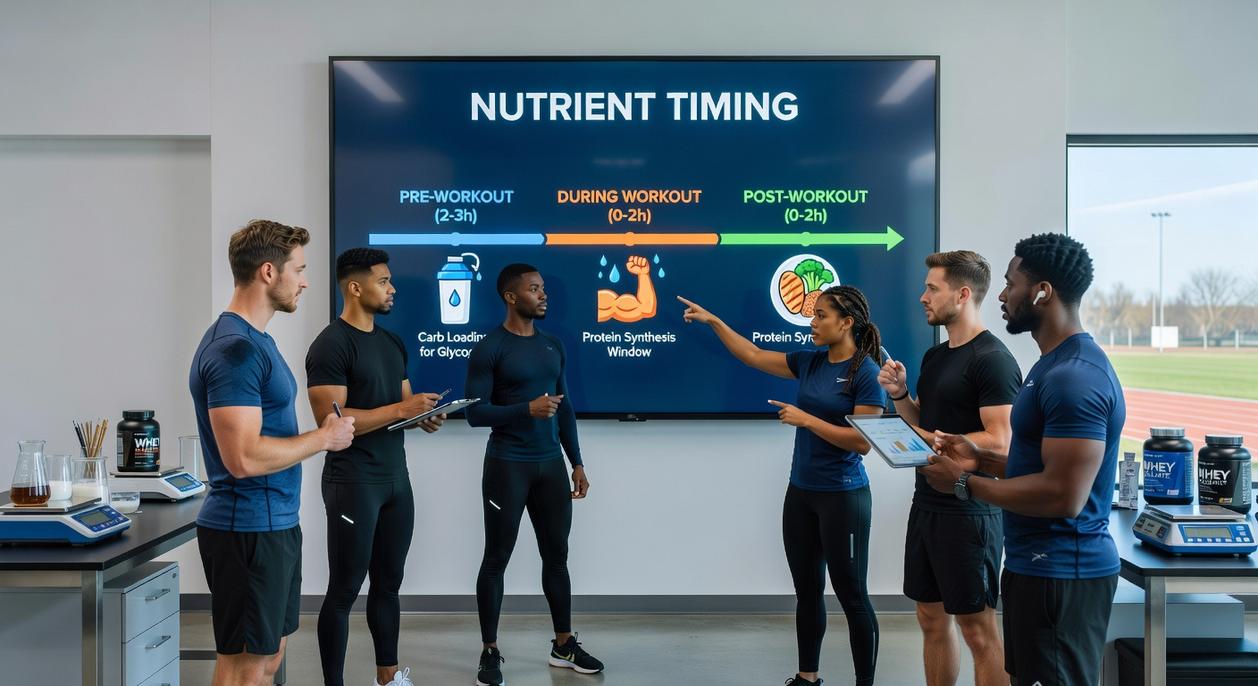
Every tough workout creates controlled damage in your muscles. Recovery is the process of rebuilding that damage into something stronger (think of it like upgrading software after a system reboot). The most effective approach follows the Three “R”s:
-
Repair (Protein)
Strength training stimulates Muscle Protein Synthesis (MPS)—the biological process where your body repairs and builds new muscle fibers. Research published in the Journal of the International Society of Sports Nutrition shows that 20–40g of high-quality protein maximally stimulates MPS in most adults. Whey protein, Greek yogurt, chicken, eggs, and lentils provide essential amino acids—especially leucine, the key trigger for MPS. Without adequate protein, recovery stalls. Some argue total daily intake matters more than timing alone—and that’s partly true. However, evenly distributing protein improves muscle adaptation outcomes. -
Refuel (Carbohydrates)
Next, carbohydrates replenish glycogen—stored energy in your muscles. According to the American College of Sports Medicine, intense exercise can significantly deplete glycogen stores. Replacing them is non-negotiable if you train again within 24 hours. Rice, potatoes, fruit, and whole grains accelerate recovery and restore performance capacity. -
Rehydrate (Fluids + Electrolytes)
Even 2% dehydration can impair performance (National Academy of Sports Medicine). Rehydrating with water plus sodium helps restore fluid balance and muscle function.
While the “30-minute anabolic window” is overstated, applying nutrition timing strategies by eating a balanced meal within 1–2 hours post-workout consistently supports optimal repair.
Pro tip: Combine protein and carbs together—they work better as a team than alone.
Beyond the Gym: Structuring Nutrition on Rest Days
First, remember this: you don’t build muscle during workouts—you build it during recovery. Resistance training creates microscopic muscle damage (tiny tears in muscle fibers), and rest days are when repair and growth actually occur. That’s why eating well on off-days isn’t optional; it’s strategic.
Start with protein pacing. Instead of cramming most of your protein into dinner, spread it across 3–5 meals or snacks to keep muscle protein synthesis (the process of building new muscle tissue) elevated. For example, eggs at breakfast, Greek yogurt midday, chicken at lunch, a protein shake post-walk, and salmon at dinner. Consistency beats overload.
Next, slightly reduce carbohydrates and overall calories to reflect lower activity. You’re not eliminating carbs—just aligning intake with output to maintain energy balance while supporting recovery.
Finally, apply nutrition timing strategies consistently. Steady fueling improves energy stability, metabolic efficiency, and overall wellness (your future self will thank you). Pro tip: hydrate intentionally—recovery depends on it.
Your daily results hinge on precision. Mastering nutrient timing is the lever that unlocks the final 10% of progress—the difference between good and peak. At its core, it’s simple: carbs before for fuel, protein and carbs after for recovery, plus consistent protein daily. These nutrition timing strategies enhance glycogen stores (your muscles’ stored fuel) and stimulate muscle protein synthesis—the repair process that builds strength.
Your Actionable Checklist
- 1–2 hours pre-workout: Eat a carb-rich snack.
- 1–2 hours post-workout: Consume 20–40g protein with ample carbs.
- On all days: Include protein every 3–4 hours.
Follow it consistently, and results compound.
Build Smarter Recovery and Stronger Results
You came here looking for clarity on how to fuel your body for better performance, faster recovery, and consistent progress. Now you understand how smart food choices, hydration, and nutrition timing strategies work together to support muscle repair, energy balance, and long-term results.
The real pain point isn’t effort — it’s doing all the work and still feeling stuck, sore, or low on energy. Without a structured approach to fueling and timing, even the best workouts can underdeliver.
Now it’s time to take action. Start applying these principles to your weekly routine, plan your meals around your training demands, and track how your body responds. If you’re ready for a proven system that eliminates guesswork and accelerates results, explore a structured performance plan built to optimize recovery, strength, and endurance. Thousands are already transforming their energy and mobility with science-backed strategies — you can too.
Take control of your fueling today and turn every workout into measurable progress.
 Director of Fitness Programs
James Rossmarindez oversees the development and execution of ZayePro’s fitness and mobility initiatives. With extensive experience in personal training and functional movement coaching, he designs programs that balance strength, flexibility, and wellness. Ross emphasizes client-centered approaches that adapt to individual goals. He collaborates with the team to integrate innovative health strategies into daily routines. Passionate about education, he also leads workshops and virtual sessions.
Director of Fitness Programs
James Rossmarindez oversees the development and execution of ZayePro’s fitness and mobility initiatives. With extensive experience in personal training and functional movement coaching, he designs programs that balance strength, flexibility, and wellness. Ross emphasizes client-centered approaches that adapt to individual goals. He collaborates with the team to integrate innovative health strategies into daily routines. Passionate about education, he also leads workshops and virtual sessions.