

Picture a swimmer who shaves two seconds off a personal best, then loses it the next week after a rough night of sleep, a tweaked shoulder, and a coach changing the set mid-practice. The body did not collapse. The plan did. What separates athletes who recover from a setback like this from those who spiral is rarely raw talent. It is how they think about the gap between expectation and reality.
That gap is where mental conditioning lives. And it is the part of training most athletes underdevelop.
What a Growth Mindset Actually Means in Sport
A growth mindset, in the simplest sense, is the belief that ability is built rather than fixed. In sport, this shows up as a willingness to treat training plateaus, missed lifts, lost matches, and unexpected fatigue as information. Not verdicts.
The fixed version sounds like this: “I’m just not a sprinter.” The growth version sounds like: “My mechanics under fatigue need work, and my top-end speed is undertrained.”
Same athlete. Same body. Different operating system.
Research on professionals working through high-pressure change, from clinicians during the pandemic to teams restructuring their workflows, suggests that people often adapt better when they frame disruption as a problem to solve rather than a personal failing. Athletes are no exception. The training environment just compresses the timeline.
Why Adaptability Matters More Than Consistency
Most training programs assume a clean line: increase load, recover, repeat. Real training never works like that. Sleep dips. Travel happens. A nagging hamstring shows up the week of a competition. Periodization on paper meets a body that has its own opinion.
This is where adaptability often separates the athletes who keep improving from the ones who stall. And it is worth naming clearly that the ability to adapt is a skill, not a personality trait. It can be practiced. Studies on people learning to make better decisions in shifting environments suggest that feedback and visible change cues, things like measurable progress markers and honest performance reviews, can help people respond more flexibly over time.
In athletic terms, the more an athlete pays attention to what is actually happening in their body and training, the better they often become at adjusting in real time. That feedback loop is trainable.
The Daily Mechanics: How This Mindset Shows Up
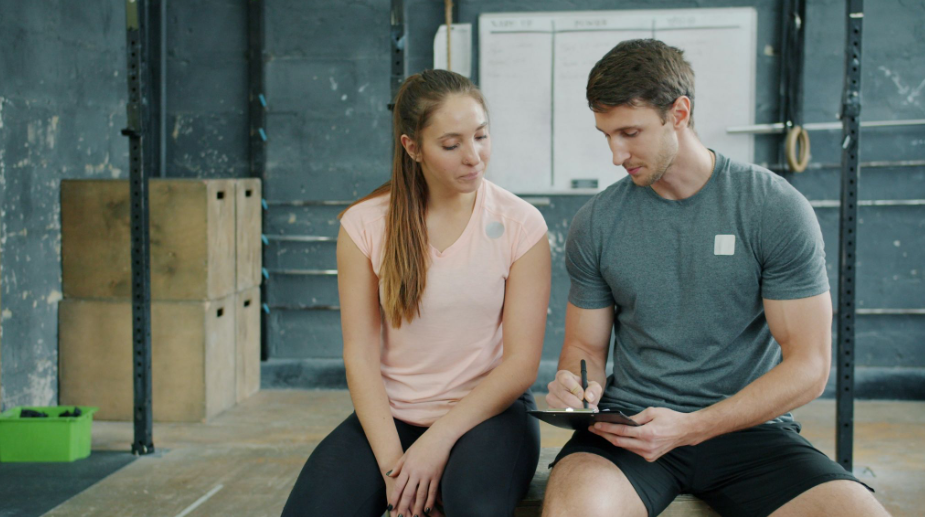
A growth-oriented athlete does a few small things consistently. Not all at once. Not perfectly. But often enough that the habits compound.
They separate effort from identity. A bad session is a bad session. Not proof of a ceiling. This sounds obvious until you watch how quickly a missed PR turns into “maybe I’m not built for this” in someone’s head.
They name what they noticed. After training, the question is not “was it good or bad?” It is more specific. Where did form break down? What was the heart rate trend? Did the legs feel heavy from the start, or only after the third set?
They treat recovery as part of training. Sleep, hydration, fueling, and easy days are not interruptions. They are the conditions that let adaptation happen. Athletes who view rest as wasted time tend to undertrain the part of their physiology that actually builds strength and speed.
They ask for feedback they might not want. Coaches, training partners, video review. The growth mindset stays curious even when the feedback stings.
Recognizing Real Fatigue Versus a Warning Sign
This is where the mental game has to meet the physical one. Athletes pushing through “mental blocks” sometimes push through actual injury. A growth mindset is not the same as ignoring the body.
Normal post-exertion experiences usually include:
- Heavy, sore muscles that improve with light movement and 24 to 72 hours of recovery
- Temporary drops in motivation during heavy training blocks
- Sleep changes that resolve within a few nights
- Brief soreness around joints that eases with proper warm-up
Symptoms that should pause training and prompt evaluation by a clinician include:
- Sharp, localized joint pain, especially with swelling or instability
- Chest pain, unusual shortness of breath, dizziness, or fainting
- Persistent fatigue that does not improve with rest across one to two weeks
- Pain that changes your gait or technique
- Signs of overreaching that linger: elevated resting heart rate, mood changes, repeated illness, or sleep that does not restore energy
Mindset work helps an athlete keep training when training is what is needed. It also helps them stop training when stopping is what is needed. Both decisions take honesty.
Building the Mental Side Without Turning It Into a Slogan
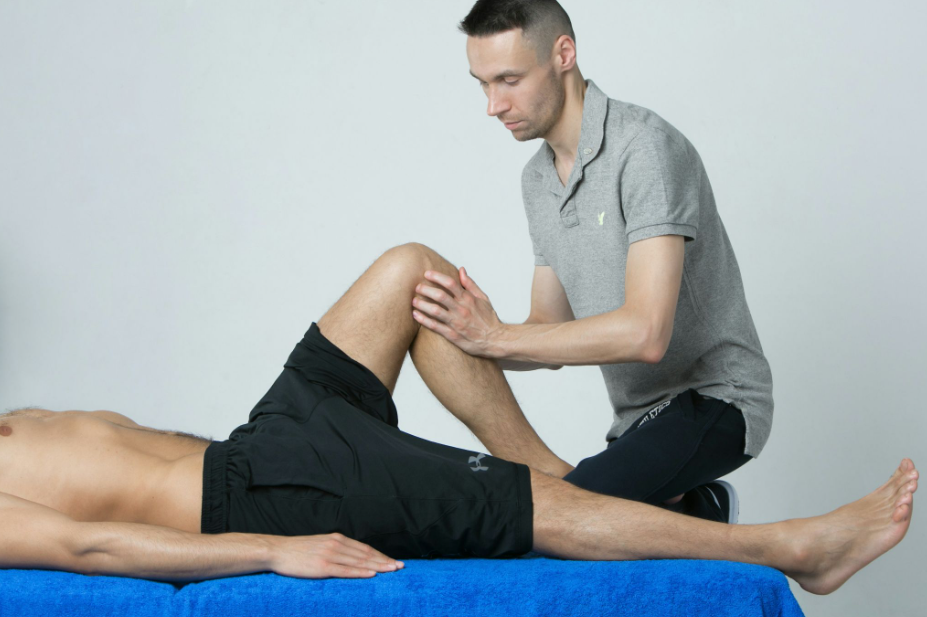
A lot of sport psychology gets reduced to wall posters. Visualize. Believe. Push through. These can be useful framings, but they do not build skill on their own.
What seems to actually move the needle, based on how adaptable performers across high-pressure fields develop, is closer to this:
A short, honest post-session reflection. Two or three minutes. What worked, what did not, what to try next time. Written or spoken, but specific.
A planned approach to setbacks. Not “I’ll figure it out when it happens.” More like: “If I miss this lift twice, I drop the weight and focus on bar path.” Pre-deciding removes ego from the moment.
A support system that gives accurate information, not just encouragement. Coaches, training partners, physical therapists, and sometimes mental performance consultants. People who reflect reality back, kindly but clearly.
A willingness to revise the plan. Programs are hypotheses. The body provides the data. Athletes who treat their training plan as sacred tend to fight their own physiology. Athletes who treat it as a working draft tend to keep progressing.
What This Looks Like Over a Season
A season is long enough to show the difference. Two athletes with similar physical talent but different mental frameworks will look identical in week three. By week twenty, the gap is usually obvious.
The adaptable athlete has navigated a minor injury, a confidence dip, a coaching change, a travel block, and an off race. Each one taught them something usable. The fixed-mindset athlete has hit the same wall five times and called it bad luck.
Neither outcome is destiny. Mindset is not a trait you have or do not have. It is a set of habits practiced under fatigue, when no one is watching, and when the easier option is to disengage.
The athletes who get good at the mental side rarely talk about it as motivation. They talk about it as work. The same work as conditioning, lifting, and recovery. A piece of the program.
That framing alone changes things. When mental skill is treated as trainable, it gets trained. When it gets trained, performance becomes more durable. And durability, over a season or a career, is what most athletes are actually trying to build.
Safety Disclaimer
If you or someone you love is in crisis, call 911 or go to the nearest emergency room. You can also call or text 988, or chat via 988lifeline.org to reach the Suicide & Crisis Lifeline. Support is free, confidential, and available 24/7.
Author Bio
Earl Wagner is a health content strategist focused on behavioural systems, clinical communication, and data-informed healthcare education.
Sources
- Erin N McCormick. (2022). Choice adaptation to changing environments: trends, feedback, and observability of change. Memory & cognition. https://doi.org/10.3758/s13421-022-01313-2
 James Rossmarindez writes the kind of holistic wellness strategies content that people actually send to each other. Not because it's flashy or controversial, but because it's the sort of thing where you read it and immediately think of three people who need to see it. James has a talent for identifying the questions that a lot of people have but haven't quite figured out how to articulate yet — and then answering them properly.
They covers a lot of ground: Holistic Wellness Strategies, Pro Insights, Health Innovation Alerts, and plenty of adjacent territory that doesn't always get treated with the same seriousness. The consistency across all of it is a certain kind of respect for the reader. James doesn't assume people are stupid, and they doesn't assume they know everything either. They writes for someone who is genuinely trying to figure something out — because that's usually who's actually reading. That assumption shapes everything from how they structures an explanation to how much background they includes before getting to the point.
Beyond the practical stuff, there's something in James's writing that reflects a real investment in the subject — not performed enthusiasm, but the kind of sustained interest that produces insight over time. They has been paying attention to holistic wellness strategies long enough that they notices things a more casual observer would miss. That depth shows up in the work in ways that are hard to fake.
James Rossmarindez writes the kind of holistic wellness strategies content that people actually send to each other. Not because it's flashy or controversial, but because it's the sort of thing where you read it and immediately think of three people who need to see it. James has a talent for identifying the questions that a lot of people have but haven't quite figured out how to articulate yet — and then answering them properly.
They covers a lot of ground: Holistic Wellness Strategies, Pro Insights, Health Innovation Alerts, and plenty of adjacent territory that doesn't always get treated with the same seriousness. The consistency across all of it is a certain kind of respect for the reader. James doesn't assume people are stupid, and they doesn't assume they know everything either. They writes for someone who is genuinely trying to figure something out — because that's usually who's actually reading. That assumption shapes everything from how they structures an explanation to how much background they includes before getting to the point.
Beyond the practical stuff, there's something in James's writing that reflects a real investment in the subject — not performed enthusiasm, but the kind of sustained interest that produces insight over time. They has been paying attention to holistic wellness strategies long enough that they notices things a more casual observer would miss. That depth shows up in the work in ways that are hard to fake.