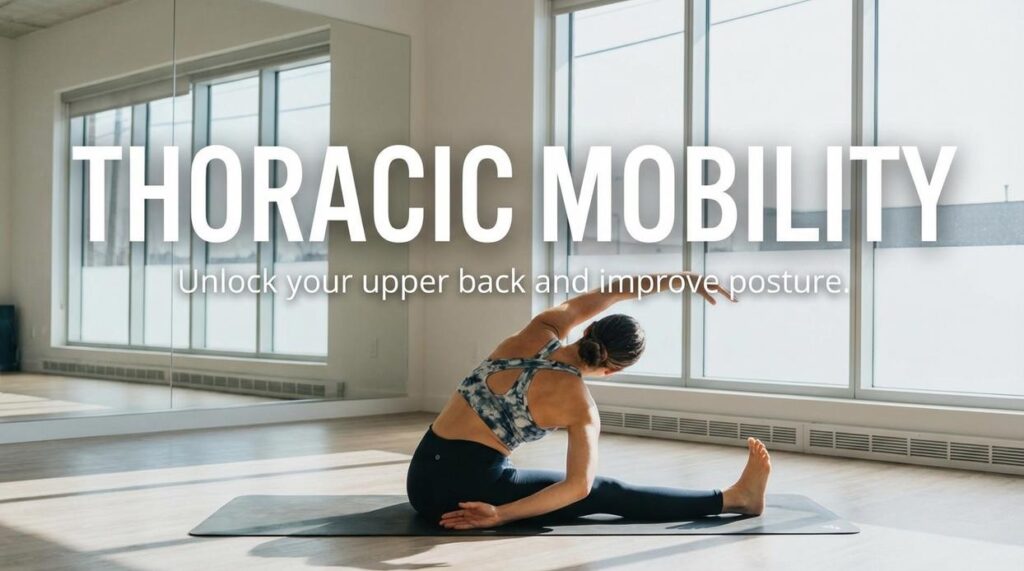

If you’re searching for the fastest way to fix tight hips fast, you’re likely dealing with stiffness, nagging lower back discomfort, or limited mobility that’s holding back your workouts and daily movement. Tight hips don’t just feel restrictive—they can disrupt posture, reduce strength output, and increase injury risk if left unaddressed.
This article is designed to give you a clear, practical path forward. You’ll learn why hip tightness happens, which muscles are actually responsible, and the most effective mobility drills and activation strategies to create lasting relief—not just temporary stretching results. We’ll also break down how to integrate these techniques into your daily routine or workouts for sustainable progress.
Our approach is grounded in current mobility research, exercise science principles, and real-world application across fitness and rehabilitation settings. If you want targeted, efficient strategies that work with your body—not against it—you’re in the right place.
Why Your Hips Feel Stuck
Most people blame aging for stiff hips. I disagree.
Tight hips usually come from hours of sitting, which shortens the hip flexors (muscles that lift your knee). When they stay shortened, they tug on your lower back and limit rotation.
Five minutes can change that.
To fix tight hips fast, follow this sequence:
- Glute bridges for activation
- Half-kneeling hip flexor stretch
- 90/90 rotations for internal and external range
- Standing hamstring folds
- Squat hold with breathing
Research shows mobility improves range of motion as effectively as static stretching (Behm et al., 2016).
I’ve seen it work.
Why Your Tight Hips Are Holding You Back
The Root Cause
Your hips are powered by the hip flexors (muscles that lift your knee), glutes (your primary hip stabilizers), and deep stabilizers that keep the joint centered. Sit for 6–8 hours a day and those hip flexors stay SHORTENED while your glutes switch OFF (yes, that’s a thing). Driving, desk work, even scrolling—modern life trains your body into chronic tightness. Over time, your brain treats this restricted position as NORMAL.
The Domino Effect
Tight hips tilt your pelvis forward, stressing the lower back, tugging on the knees, and wrecking posture. That nagging back pain? Often a hip issue in disguise. Reduced stride length, slower sprints, weaker lifts—it’s like trying to run with the parking brake on.
The Goal of This Routine
This isn’t just about stretching. It’s about restoring BALANCE.
- Strengthen glutes (bridges, step-ups)
- Mobilize hip flexors (half-kneeling stretch)
- Activate before workouts
Pro tip: Squeeze your glute during hip stretches to deepen release.
Consistency beats hacks—though these drills can help fix tight hips fast.
The 5-Move Hip Mobility Circuit for Rapid Results
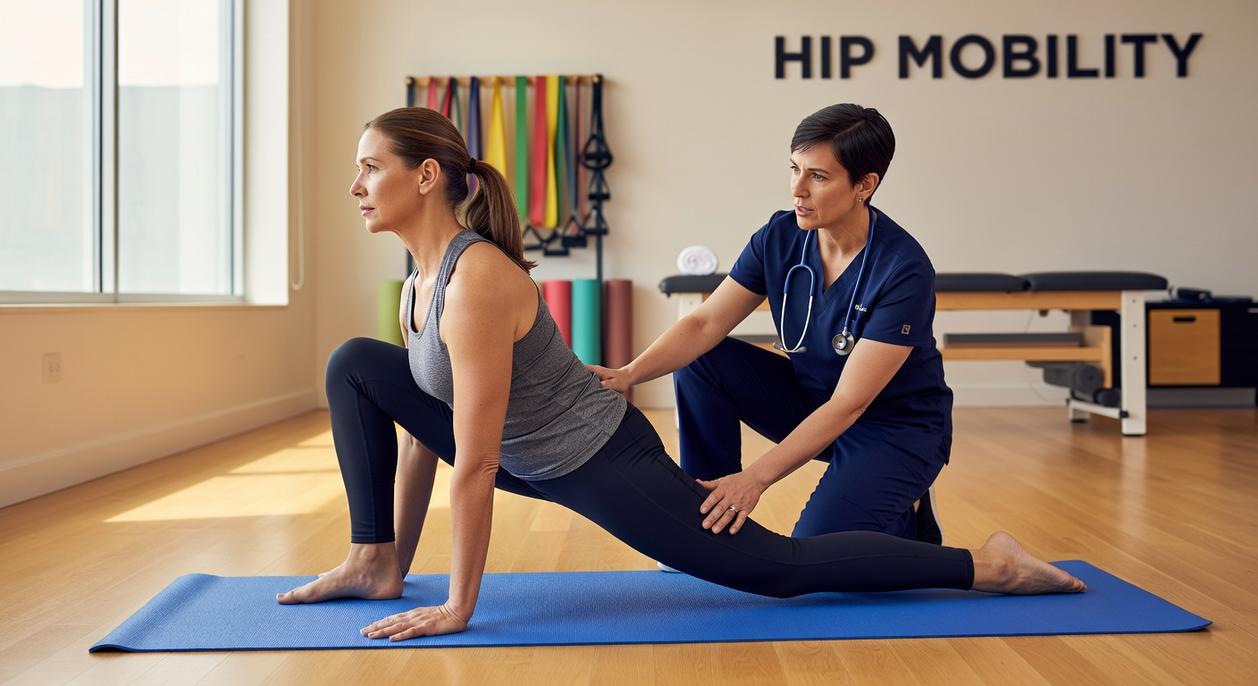
Tight hips are more than a mild annoyance after leg day. They’re often the hidden bottleneck behind back pain, sluggish sprint speed, and shallow squats. If you want to fix tight hips fast, you need more than random stretching. You need a focused circuit built on PROVEN mobility principles.
First, a quick definition. Hip mobility is your joint’s ability to actively move through a full range of motion with control. It’s different from flexibility, which simply measures how far a muscle can passively stretch. Mobility means strength + control at end ranges (the positions most people avoid).
Research published in the Journal of Strength and Conditioning Research found that restricted hip mobility correlates with reduced squat depth and increased lumbar spine stress. In plain English: when hips don’t move, your lower back pays the price.
Here’s the 5-move circuit designed for measurable results.
1. 90/90 Hip Rotations (2 sets of 8 per side)
This drill trains internal and external rotation — movements critical for running and cutting. Limited hip internal rotation has been linked to higher injury risk in athletes (American Journal of Sports Medicine).
Sit in a 90/90 position and rotate your knees side to side without using your hands if possible. Stay tall through your spine.
Why it works: You’re strengthening the hip capsule at end range, not just stretching it.
2. Couch Stretch with Glute Engagement (2 x 30 seconds per side)
The hip flexors tighten from prolonged sitting. A 2020 study in Sports Medicine highlighted that extended sitting shortens the iliopsoas, contributing to anterior pelvic tilt.
Set up in a couch stretch, but here’s the difference: squeeze your glute HARD on the back leg. This creates reciprocal inhibition — when one muscle contracts, its opposing muscle relaxes.
Pro tip: Don’t arch your lower back to “fake” more stretch. Keep ribs down and core braced.
3. Cossack Squats (2 sets of 6 per side)
Lateral strength is often neglected. Yet frontal-plane mobility is crucial for cutting, agility, and knee stability.
Shift into a deep side lunge while keeping the opposite leg straight. Stay upright.
A case review in Physical Therapy in Sport showed that athletes with better lateral hip strength demonstrated improved change-of-direction speed.
Translation: STRONGER HIPS = FASTER MOVEMENT.
4. Hip CARs (Controlled Articular Rotations) (2 sets of 5 per side)
CARs take your hip through its full rotational capacity under tension. This reinforces joint health by stimulating synovial fluid production — the fluid that nourishes cartilage.
Move slowly. Lift the knee, rotate outward, extend behind you, then reverse.
It may look simple. It is not. (If you’re shaking, you’re doing it right.)
5. Deep Squat Hold with Reach (2 x 45 seconds)
The deep squat is a resting position in many cultures. Yet many adults can’t hold it comfortably for 30 seconds.
Sit into a deep squat. Keep heels down. Reach one arm overhead and rotate your torso.
A 2018 review in Frontiers in Physiology emphasized that loaded deep squat positions improve joint proprioception — your body’s awareness of position — reducing injury likelihood.
This final move integrates everything: flexion, rotation, and stability.
Some critics argue mobility circuits are overhyped. They’ll say strength training alone restores range of motion. And yes, compound lifts do improve mobility — to a point. A 2011 study in JSCR showed strength training increased flexibility similarly to static stretching in untrained individuals.
But here’s the catch.
If you lack access to certain ranges entirely, loading dysfunctional patterns just reinforces compensation. That’s why targeted mobility work accelerates results.
If performance is your goal, pair this circuit with strength-based programming and explore additional mobility drills that enhance athletic performance: https://zayepro.com/mobility-drills-that-enhance-athletic-performance/
Run this circuit 3–4 times per week. Most people notice measurable improvements in squat depth and stride length within 2–3 weeks.
Consistency beats intensity here. You don’t need marathon sessions. You need CONTROLLED reps and focused breathing.
Your hips are your power center. Unlock them, and everything from deadlifts to daily movement feels smoother.
And if your squat suddenly feels effortless? Don’t be surprised. That’s not magic.
That’s mobility done RIGHT.
Your Blueprint for Consistency and Fast Progress
First, commit to this five-move circuit at least five days a week. Consistency compounds (think of it like interest for your hips). Morning, post-workout, or before bed all work—just pick a slot and protect it.
Next, learn the line between productive tension and sharp pain. Stretching should challenge, not sting. If it bites, back off.
Meanwhile, breathe deeply into your belly during every hold. Diaphragmatic breathing—slow breaths that expand the abdomen—signals your nervous system to relax, allowing muscles to lengthen.
Want to fix tight hips fast? Add smart strength training for lasting change.
Integrating Hip Mobility Into Your Daily Life
You came here because tight hips limit your life, right? What if five minutes could change that? This routine targets root causes to fix tight hips fast and restore comfort to lasting relief.
- Start with Move 1 now.
Will you commit tomorrow morning?
Move Freely and Leave Tight Hips Behind
You came here because tight, restricted hips are slowing you down — in your workouts, your daily movement, and maybe even your sleep. Now you understand what’s causing that stiffness and what it actually takes to correct it safely and effectively.
The truth is, tight hips don’t fix themselves. The longer you ignore them, the more they compensate, strain surrounding muscles, and increase your risk of pain or injury. What you need is a focused, proven approach that helps you fix tight hips fast without wasting time on random stretches that don’t work.
Start applying these mobility strategies consistently this week. Prioritize activation, controlled strength, and intentional recovery.
If you’re serious about eliminating stiffness and moving pain‑free, follow a structured mobility plan designed to restore full range of motion. Join thousands who’ve already transformed their movement — start today and take the first step toward stronger, looser, more powerful hips.
 Director of Fitness Programs
James Rossmarindez oversees the development and execution of ZayePro’s fitness and mobility initiatives. With extensive experience in personal training and functional movement coaching, he designs programs that balance strength, flexibility, and wellness. Ross emphasizes client-centered approaches that adapt to individual goals. He collaborates with the team to integrate innovative health strategies into daily routines. Passionate about education, he also leads workshops and virtual sessions.
Director of Fitness Programs
James Rossmarindez oversees the development and execution of ZayePro’s fitness and mobility initiatives. With extensive experience in personal training and functional movement coaching, he designs programs that balance strength, flexibility, and wellness. Ross emphasizes client-centered approaches that adapt to individual goals. He collaborates with the team to integrate innovative health strategies into daily routines. Passionate about education, he also leads workshops and virtual sessions.