
The True Partnership: Why Strength and Flexibility Are Not Opposites
Let’s address a common frustration.
You stretch consistently. You lift consistently. Yet you still feel tight, achy, or unstable. It’s annoying (and confusing).
Here’s the truth: mobility isn’t just flexibility. Flexibility is passive range of motion—how far a limb moves with assistance. Mobility is usable, controllable range of motion. That control requires strength.
The old “muscle-bound” myth claims lifting makes you stiff. Outdated. When strength training is done through a full range of motion—like deep squats or controlled presses—it actually improves mobility (American Council on Exercise). The stiffness people feel often comes from poor programming, not muscle itself.
Then there’s dynamic stability—your body’s built-in bracing system. Strong, supple muscles absorb force, protect cartilage, and enhance joint stability for athletes during explosive movement (think landing from a rebound, not just posing like a superhero).
Some argue stretching alone prevents injury. But without strength, that flexibility lacks control.
The real goal? Stable mobility. Not strength or flexibility—both, working together.
Building a Resilient Foundation: Strength Training for Joint Integrity

If you want durable joints, you need to train the body as a system—not as isolated parts. That starts with compound lifts, meaning multi-joint movements that work several muscle groups at once. Think squats, deadlifts, overhead presses, and rows. These exercises teach coordination between muscles, tendons, and ligaments so no single joint takes all the stress. For example, a properly executed squat distributes load through the hips, knees, and ankles instead of punishing just one area (your knees will thank you later).
However, strength alone isn’t enough. You also need to master eccentric control—the “negative” or lowering phase of a lift. When you lower a dumbbell slowly during a press, you’re strengthening connective tissues like tendons and ligaments. Research shows eccentric training improves tendon resilience and reduces injury risk (LaStayo et al., 2014). In real life, this control helps you decelerate safely—like landing from a jump without your knees collapsing.
Next, incorporate unilateral work, or single-limb exercises. Lunges and single-arm rows expose strength imbalances that bilateral lifts can hide. Left unchecked, these asymmetries place uneven stress on joints. Addressing them is key for joint stability for athletes and everyday lifters alike.
Finally, follow these smart programming essentials:
- Thorough warm-ups to increase tissue elasticity
- Never sacrifice form for heavier weight
- Listen to early pain signals (they’re warnings, not challenges)
- Schedule deload weeks to allow recovery
For even better results, pair strength work with daily mobility routines for desk workers to keep joints moving well between sessions.
Unlocking Athletic Potential: A Modern Approach to Flexibility
Flexibility isn’t just about touching your toes. It’s about using the RIGHT TOOL at the right time so your body performs better, recovers faster, and stays resilient under pressure.
Some argue that stretching is overrated—that strength training alone builds enough mobility. There’s some truth there. Strong muscles through full ranges of motion do improve flexibility. But ignoring targeted stretching is like skipping oil changes because your car still runs (for now). The right approach enhances performance and reduces unnecessary strain on joints and tissues (Behm & Chaouachi, 2011).
Dynamic Stretching (For Warm-ups)
Dynamic stretching uses controlled, movement-based exercises like leg swings, walking lunges with a twist, and arm circles. Instead of holding positions, you move through them.
What’s in it for you? Increased blood flow, improved muscle elasticity, and a nervous system that’s primed for action. Research shows dynamic warm-ups can enhance power and speed performance compared to static stretching before activity (Simic et al., 2013). In short: you feel spring-loaded, not sluggish.
Static Stretching (For Cool-downs)
Static stretching involves holding a muscle in a lengthened position for 30–60 seconds after training.
The benefit? It helps restore muscles to resting length and signals your nervous system to shift into recovery mode. Think of it as telling your body, “We’re safe now.” Over time, this supports flexibility gains and reduces post-workout tightness.
Mobility Drills (For Dedicated Sessions)
Mobility drills—like Controlled Articular Rotations (CARs)—actively move joints through their full range under control. This builds strength at the edges of motion, improving joint stability for athletes and long-term durability.
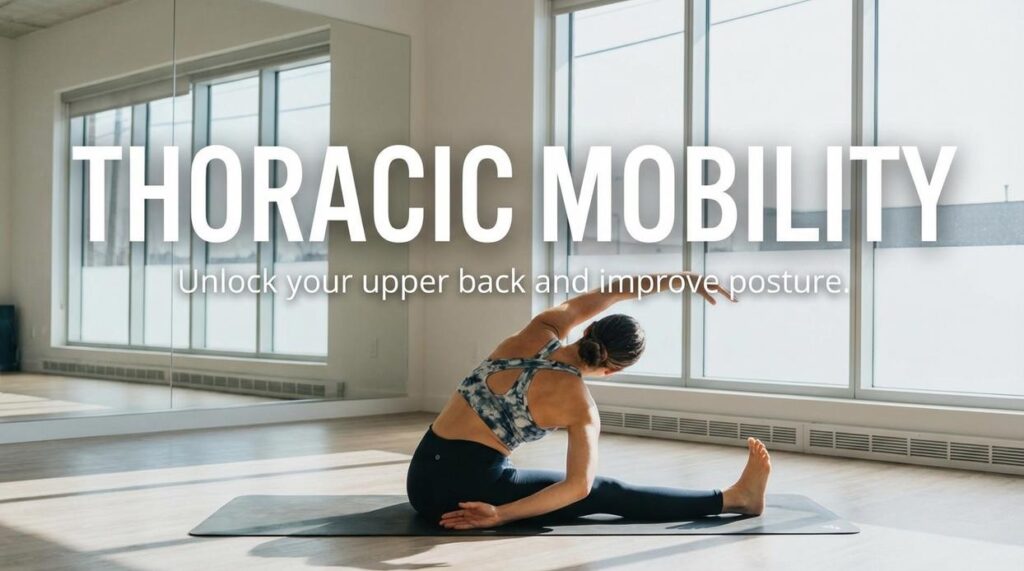
Pro tip: Spend 5–10 minutes daily on hips, shoulders, and thoracic spine. Small, consistent inputs create BIG returns (your future self will thank you).
Move Better, Perform Stronger, Last Longer
For too long, strength and flexibility have been treated like separate goals. Heavy lifting on one side. Stretching on the other. Now you have a clear framework to bring them together into one cohesive system.
The real frustration isn’t lack of effort. It’s the endless cycle of pushing hard, feeling progress, then getting sidelined by tightness, strain, or injury. That stop‑start pattern kills momentum and limits long-term results.
It doesn’t have to be that way.
When you combine intelligent strength training with purposeful mobility work, you create a body that’s both powerful and resilient. You improve performance while building joint stability for athletes who want to move explosively without breaking down. Strength supports mobility. Mobility protects strength.
You came here looking for a smarter way to train. Now you have it.
Here’s your next move: starting today, add one dynamic warm-up before your workout and one static stretch after. That’s it. One small upgrade to break the injury cycle and extend your athletic longevity.
Athletes who prioritize mobility alongside strength stay in the game longer—and perform at a higher level. Don’t wait until pain forces a change. Take control of your training now and build a body that performs today and lasts for years to come.
 Director of Fitness Programs
James Rossmarindez oversees the development and execution of ZayePro’s fitness and mobility initiatives. With extensive experience in personal training and functional movement coaching, he designs programs that balance strength, flexibility, and wellness. Ross emphasizes client-centered approaches that adapt to individual goals. He collaborates with the team to integrate innovative health strategies into daily routines. Passionate about education, he also leads workshops and virtual sessions.
Director of Fitness Programs
James Rossmarindez oversees the development and execution of ZayePro’s fitness and mobility initiatives. With extensive experience in personal training and functional movement coaching, he designs programs that balance strength, flexibility, and wellness. Ross emphasizes client-centered approaches that adapt to individual goals. He collaborates with the team to integrate innovative health strategies into daily routines. Passionate about education, he also leads workshops and virtual sessions.