

If you’re searching for clear, science-backed guidance on foam rolling for fascia, you’re likely looking to move better, recover faster, and reduce stubborn muscle tightness that stretching alone doesn’t fix. This article is designed to give you exactly that: practical techniques, evidence-informed insights, and a deeper understanding of how fascia responds to targeted pressure and movement.
Many people use a foam roller without truly knowing what it’s doing beneath the surface. Here, you’ll learn how fascial tissue adapts, when rolling is most effective, and how to integrate it into a smart mobility or workout routine for lasting results. We’ve drawn from current research in sports science, rehabilitation principles, and performance coaching best practices to ensure the guidance is accurate, safe, and actionable.
By the end, you’ll know not just how to roll—but how to make foam rolling for fascia a strategic tool in your overall wellness and performance plan.
Unlock Your Body’s Potential
Tight muscles and stubborn soreness aren’t just annoyances; they limit how you move, train, and even sit comfortably. The hidden culprit is fascia—the connective tissue web wrapping your muscles. When it becomes restricted, mobility drops and aches rise. foam rolling for fascia offers a simple, science-backed way to restore glide and ease tension.
What’s in it for you? Better flexibility, faster recovery, and smoother workouts (yes, even leg day).
- Improved circulation that helps reduce post-exercise stiffness.
By practicing self-myofascial release (SMR)—a technique applying controlled pressure to soft tissue—you support long-term performance and daily comfort overall.
What Is Myofascial Release and Why Does It Matter?
Fascia is your body’s internal webbing—a thin, connective tissue that wraps around muscles, bones, and organs to hold everything in place. Think of it like the cling wrap around leftovers: it keeps structures supported and organized. When fascia is healthy, you move smoothly. When it’s tight, everything feels restricted.
Over time, stress, repetitive motion (hello, desk jobs), or injury can create trigger points—small, tight knots or adhesions in the fascia. These spots reduce blood flow, limit mobility, and can refer pain elsewhere (which is why your tight hip might cause lower-back pain).
Myofascial Release (MFR) is a hands-on technique that applies slow, sustained pressure to these tight areas to restore elasticity and improve movement. Unlike aggressive massage, MFR works gradually, allowing tissue to lengthen safely.
The foam roller acts as a self-myofascial release (SMR) tool, letting you control pressure and target specific muscles.
Use foam rolling for fascia in the section once exactly as it is given
How to try it:
- Roll slowly (about 1 inch per second)
- Pause on tender spots for 20–30 seconds
- Breathe deeply to help tissue relax
Pro tip: Consistency beats intensity. A few minutes daily can improve mobility and reduce soreness significantly.
The Proven Benefits of Consistent Foam Rolling
Consistency changes everything. When you commit to foam rolling, you unlock gains in flexibility and range of motion—the degree a joint can move through its potential. By easing fascial restrictions (fascia is the connective tissue wrapping your muscles), movement feels smoother and stronger.
Just as important, rolling helps reduce delayed onset muscle soreness (DOMS), that stiff, achy feeling 24–72 hours after a workout. By encouraging blood flow and calming inflammation, recovery speeds up so you can train again sooner.
Moreover, improved circulation means oxygen and nutrients reach tired tissues faster. Think of it like upgrading from a dirt road to a highway—traffic moves better.
Over time, healthier, pliable fascia lowers your risk of strains and pulls. Use foam rolling for fascia to keep tissues resilient, especially before and after sessions.
In short, you move better, recover faster, and stay in the game longer.
Your Guide to Effective and Safe Foam Rolling Techniques
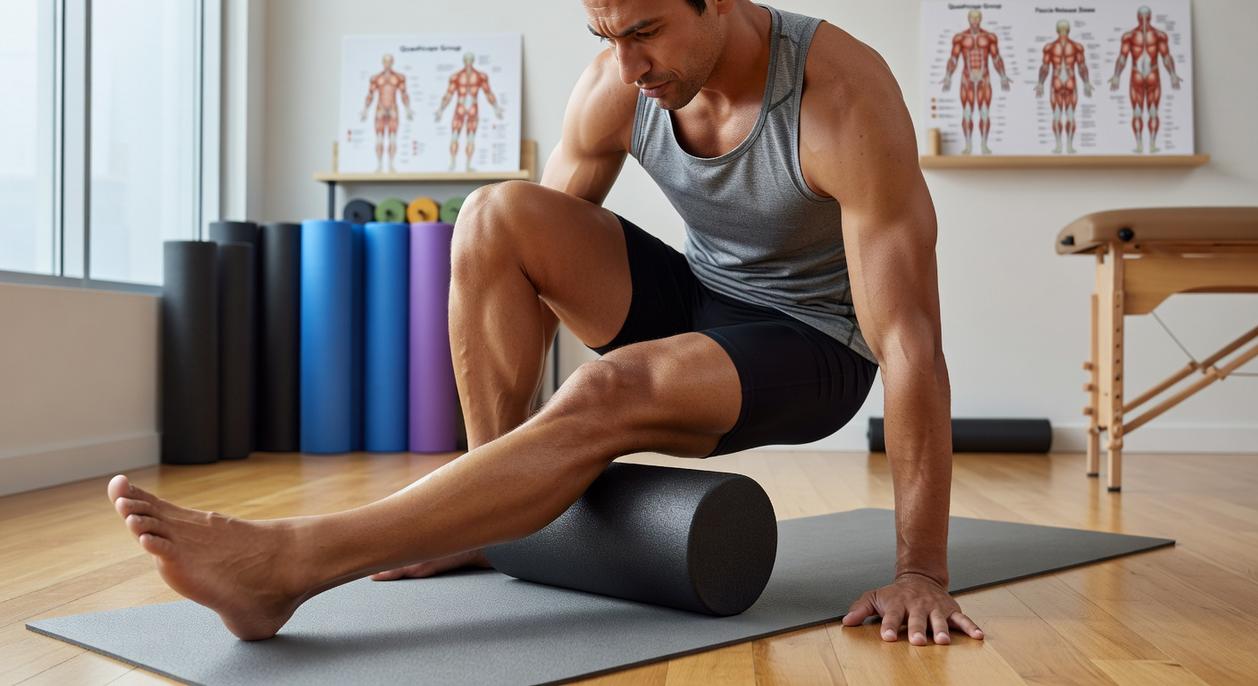
Foam rolling can feel intense at first—the slow grind of dense foam against tight muscle, the slight heat building under your skin—but done correctly, it becomes a powerful recovery ritual.
Core Principles for Success
Before you start, follow these foundational rules:
- Move slowly. Roll about one inch per second. If you’re moving fast, you’re missing the tissue response (and probably just grimacing through it).
- Breathe deeply. Inhale through your nose, exhale through your mouth. Deep breathing signals your nervous system to relax, helping tight areas soften.
- Maintain posture. Keep your core lightly engaged and spine neutral to avoid strain.
Use foam rolling for fascia to improve tissue hydration and mobility. Fascia is the thin connective tissue web that surrounds muscles and organs; when stiff, it can feel like shrink-wrap around your movement.
Finding and Releasing Trigger Points
A trigger point is a tender, knotted area within muscle tissue that can refer pain elsewhere. As you roll, pause when you find a spot that feels sharp or unusually tight. Apply steady pressure for 20–30 seconds. You might notice the discomfort melting into warmth or a subtle pulse as tension releases.
Crucial Safety Note
Avoid rolling directly over:
- Joints (knees, elbows)
- Bony areas (spine, hip bones, shins)
Instead, target the surrounding muscle. Rolling bones isn’t productive—and your body will definitely protest.
Step-by-Step for Key Muscle Groups
Calves (Gastrocnemius/Soleus): Sit with legs extended, roller under calves. Lift hips slightly and roll from ankle to below knee. Cross one leg over the other for deeper pressure.
Hamstrings & Glutes: Sit on the roller. Shift weight side to side to explore tight spots. For glutes, cross one ankle over the opposite knee and lean into the hip.
Quadriceps & Hip Flexors: Lie face down, roller under thighs. Support with forearms and roll from hip to knee. Keep your core tight to protect your lower back.
IT Band: Roll gently along the outer thigh, but focus more on the TFL (front hip) and glutes. Direct IT band pressure can be overly aggressive.
Upper Back (Thoracic Spine): Lie on your back, roller under shoulder blades. Hug your arms across your chest and roll slowly. You may hear small pops—normal joint cavitation.
For improved posture, pair this with daily shoulder mobility exercises for pain free movement.
Common Foam Rolling Mistakes and How to Correct Them
I used to treat my foam roller like a rolling pin on stubborn dough—fast, aggressive, and determined. After one particularly overzealous session, I could barely sit comfortably (lesson learned).
Mistake 1: Rolling Too Quickly
When you rush, your fascia—the connective tissue surrounding muscles—doesn’t adapt to the pressure. The fix? Slow, deliberate passes. Think melted butter, not jackhammer.
Mistake 2: Rolling Directly on an Injured Area
It seems logical to attack the sore spot. I’ve done it. Bad idea. Instead, roll the surrounding muscles to reduce tension without increasing inflammation.
Mistake 3: Spending Too Much Time on One Spot
More isn’t better. Limit trigger point work to 30–60 seconds to avoid bruising or nerve irritation.
Mistake 4: Using Poor Form
Engage your core and support yourself with your arms and opposite leg to protect your back.
Use foam rolling for fascia intentionally—your body responds best to patience, not punishment.
Consistency beats intensity. Five to ten minutes daily builds mobility, whereas one long weekly session often backfires. Start with two or three tight areas during your warm-up or cool-down; over time, progress follows. Use foam rolling for fascia to support recovery and pain relief (your future self will notice). Steadily.
Take Control of Your Health Starting Today
You came here looking for practical, sustainable ways to improve your health, move better, and feel stronger in your daily life. Now you have the tools to build smarter workouts, support recovery, and create habits that actually last.
Ignoring mobility, recovery, and foundational fitness is what keeps most people stuck—tight muscles, low energy, recurring aches, and inconsistent progress. Small gaps in your routine add up over time. The good news? So do small improvements.
By prioritizing intentional movement, strength fundamentals, and recovery strategies like foam rolling for fascia, you give your body the support it needs to perform and heal efficiently. Consistency with these principles is what separates short-term effort from long-term transformation.
If you’re ready to stop guessing and start following a smarter, science-backed approach to fitness and wellness, now is the time to take action. Join thousands who trust our proven strategies to eliminate pain points, build resilient bodies, and optimize daily performance. Start today and feel the difference in every step, lift, and stretch.
 Director of Fitness Programs
James Rossmarindez oversees the development and execution of ZayePro’s fitness and mobility initiatives. With extensive experience in personal training and functional movement coaching, he designs programs that balance strength, flexibility, and wellness. Ross emphasizes client-centered approaches that adapt to individual goals. He collaborates with the team to integrate innovative health strategies into daily routines. Passionate about education, he also leads workshops and virtual sessions.
Director of Fitness Programs
James Rossmarindez oversees the development and execution of ZayePro’s fitness and mobility initiatives. With extensive experience in personal training and functional movement coaching, he designs programs that balance strength, flexibility, and wellness. Ross emphasizes client-centered approaches that adapt to individual goals. He collaborates with the team to integrate innovative health strategies into daily routines. Passionate about education, he also leads workshops and virtual sessions.