
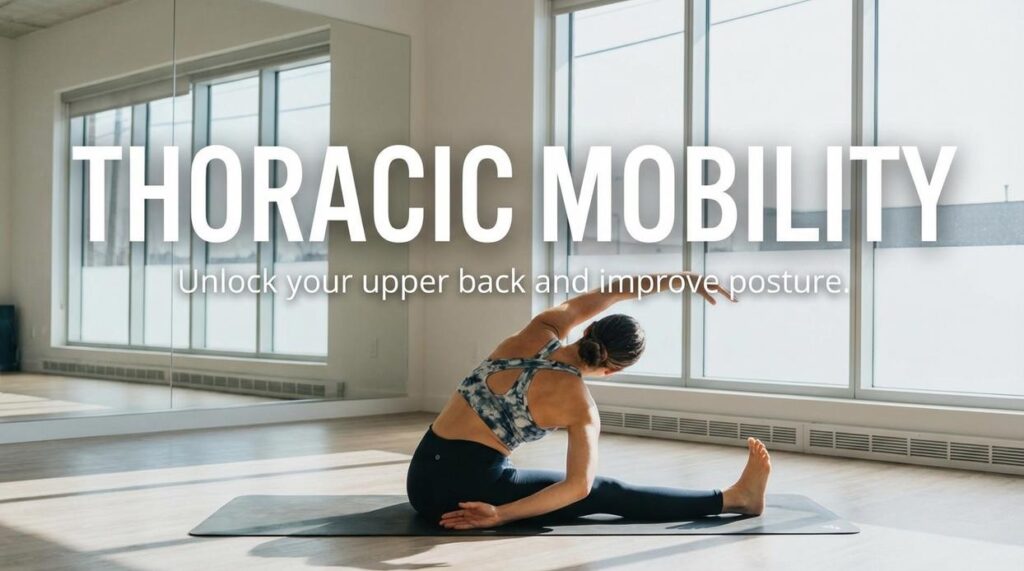
Unlocking Your Hips: The Center of All Movement
Your hips are the bridge between your upper and lower body. When they move well, everything flows. When they don’t, your lower back and knees often pay the price (and they will complain). Limited hip mobility—your joint’s ability to move freely through its full range—creates compensation patterns, meaning other muscles step in to do work they weren’t designed for. That’s when aches creep in.
Some argue tight hips are just part of aging. Not quite. Research shows prolonged sitting shortens hip flexors and reduces glute activation (American Council on Exercise). Translation: it’s lifestyle, not destiny.
Essential Hip Openers You Can Do Today
1. 90/90 Hip Switches
Sit with one leg bent at 90 degrees in front and the other at 90 degrees behind. Keep your chest tall. Slowly rotate both knees to the opposite side without using your hands if possible. Move with control—no flopping.
Real-world tip: If you play sports or lift, this improves rotational strength for cutting, pivoting, and squatting.
2. Frog Stretch
Start on hands and knees. Slide your knees wide while keeping ankles in line with knees. Sit hips back gently until you feel a deep inner-thigh stretch. Breathe slowly for 30–60 seconds. This targets the adductors (inner thigh muscles), crucial for squat depth.
3. Kneeling Hip Flexor (Couch Stretch)
Place one foot forward in a lunge. Rest your back shin against a wall or couch. Tuck your pelvis slightly and shift forward. You’ll feel the stretch along the front of the hip.
Add these to your weekly mobility training essentials routine (pro tip: 5 minutes daily beats 30 minutes once a week). Your hips are your engine—tune them accordingly.
Freeing Your Thoracic Spine: The Key to Better Posture
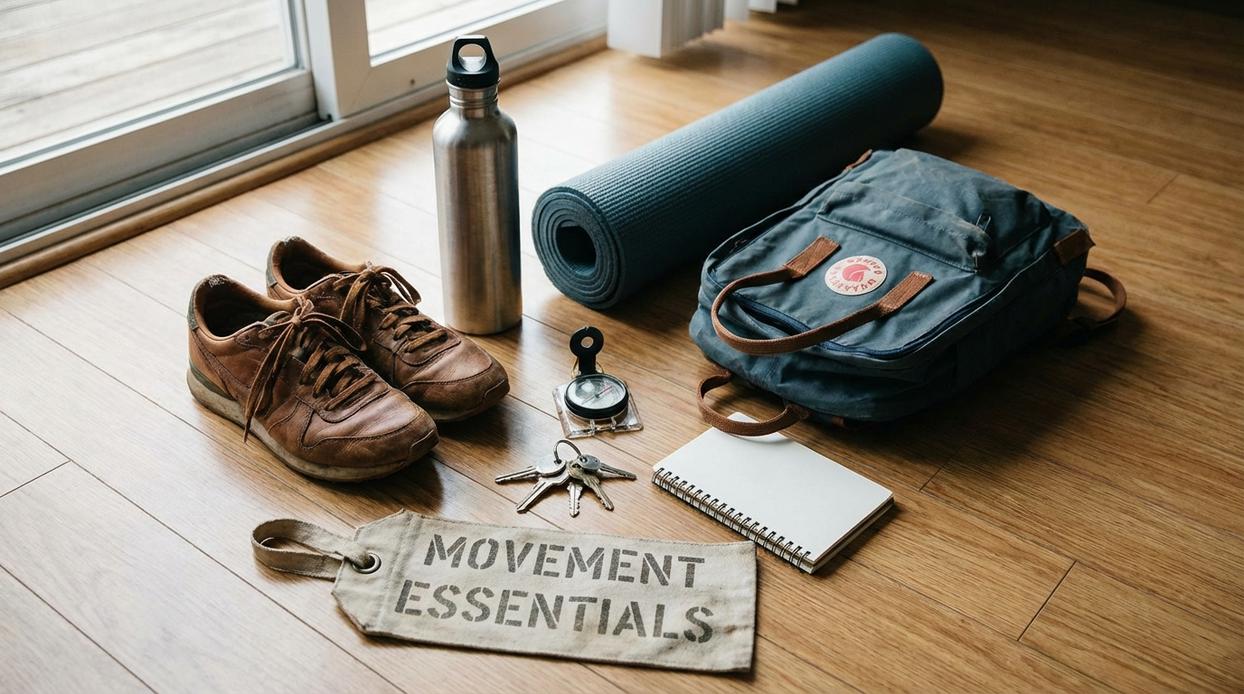
For years, I stretched my hamstrings and blamed my desk job for my back pain. Meanwhile, my mid-back barely moved. That “stuck” feeling? It was a stiff thoracic spine—the 12 vertebrae between your neck and lower back designed for rotation and extension. When it doesn’t move, your neck and lumbar spine compensate (and complain). Research shows limited thoracic mobility is linked to neck and shoulder pain because nearby joints take on extra stress (American Council on Exercise).
At first, I made the classic mistake: hammering my lower back with more stretches. It felt productive—but it didn’t solve the root issue. Once I shifted toward mobility training essentials, things changed.
Three Drills That Actually Work
1. Cat-Cow
A gentle flow between spinal flexion (rounding) and extension (arching). It “wakes up” each segment and restores awareness. Think of it as rebooting your spine (like turning it off and on again).
2. Quadruped T-Spine Rotations
On all fours, rotate one arm toward the ceiling while keeping hips stable. This isolates mid-back rotation safely.
3. Side-Lying Windmills (Book Openers)
Rotate your top arm across your body, opening the chest. It improves thoracic rotation and counters desk posture.
Some argue posture is purely strength-related. Fair—but without mobility, strength has nowhere to go. Pro tip: Pair these drills with guidance from dynamic stretching vs static stretching when to use each to apply them correctly.
Your neck will thank you (quietly, for once).
How to Build a Consistent Mobility Habit
Back in 2020, when at-home workouts surged (remember the living-room fitness boom?), many people learned the hard way that doing too much too soon leads to burnout. So start small. Pick one move for your hips, spine, and shoulders, and practice daily. Consistency beats intensity.
Use “movement snacks”—short, 2–5 minute mobility breaks folded into your day. Think hip stretches during TV time or shoulder CARs (Controlled Articular Rotations, slow joint circles that build strength at end range) between meetings.
Pair mobility with an existing habit. Add it before workouts or wind down with it nightly. Over three months, this simple stacking approach builds lasting mobility training essentials.
Your Path to Moving and Feeling Better
Movement shouldn’t feel like a struggle.
If you’ve been dealing with daily stiffness, tight hips, aching shoulders, or limited range of motion, it’s easy to think that’s just part of getting older or sitting too much. It’s not. You don’t have to accept restricted movement as your normal.
You came here looking for practical ways to improve how your body feels and functions. Now you have a toolkit of targeted exercises designed to restore flexibility, stability, and control where you need it most. These mobility training essentials are simple, effective, and built to support real life—not just workouts.
When you consistently practice these drills, you’re not just stretching. You’re actively restoring your body’s natural range of motion and building a stronger, more resilient foundation for everything you do—walking, lifting, training, even sleeping.
The key is consistency.
Choose one exercise from this list that feels most needed right now. Commit to doing it every day for the next seven days. Just one. Small, focused action creates lasting change.
Your body is built to move well. Start today—and feel the difference.
 James Rossmarindez writes the kind of holistic wellness strategies content that people actually send to each other. Not because it's flashy or controversial, but because it's the sort of thing where you read it and immediately think of three people who need to see it. James has a talent for identifying the questions that a lot of people have but haven't quite figured out how to articulate yet — and then answering them properly.
They covers a lot of ground: Holistic Wellness Strategies, Pro Insights, Health Innovation Alerts, and plenty of adjacent territory that doesn't always get treated with the same seriousness. The consistency across all of it is a certain kind of respect for the reader. James doesn't assume people are stupid, and they doesn't assume they know everything either. They writes for someone who is genuinely trying to figure something out — because that's usually who's actually reading. That assumption shapes everything from how they structures an explanation to how much background they includes before getting to the point.
Beyond the practical stuff, there's something in James's writing that reflects a real investment in the subject — not performed enthusiasm, but the kind of sustained interest that produces insight over time. They has been paying attention to holistic wellness strategies long enough that they notices things a more casual observer would miss. That depth shows up in the work in ways that are hard to fake.
James Rossmarindez writes the kind of holistic wellness strategies content that people actually send to each other. Not because it's flashy or controversial, but because it's the sort of thing where you read it and immediately think of three people who need to see it. James has a talent for identifying the questions that a lot of people have but haven't quite figured out how to articulate yet — and then answering them properly.
They covers a lot of ground: Holistic Wellness Strategies, Pro Insights, Health Innovation Alerts, and plenty of adjacent territory that doesn't always get treated with the same seriousness. The consistency across all of it is a certain kind of respect for the reader. James doesn't assume people are stupid, and they doesn't assume they know everything either. They writes for someone who is genuinely trying to figure something out — because that's usually who's actually reading. That assumption shapes everything from how they structures an explanation to how much background they includes before getting to the point.
Beyond the practical stuff, there's something in James's writing that reflects a real investment in the subject — not performed enthusiasm, but the kind of sustained interest that produces insight over time. They has been paying attention to holistic wellness strategies long enough that they notices things a more casual observer would miss. That depth shows up in the work in ways that are hard to fake.