
Struggling to stay consistent with your workouts because you don’t have a gym membership, expensive equipment, or hours of free time? You’re not alone. The good news: you don’t need any of that to build real strength and improve your health. This guide shows you how to unlock your fitness potential through minimal equipment home workouts designed around proven movement science. By focusing on foundational patterns that enhance strength, mobility, and endurance, you’ll follow a clear, effective plan that delivers results safely. Walk away with actionable routines and a simple progression strategy you can use right at home.
Your Essential At-Home Fitness Toolkit
I learned the hard way that fancy gear doesn’t build strength—consistency does. During a winter when gyms closed, I trained in my living room with nothing but my bodyweight, and that’s when progress clicked. Your body is the first barbell; every push-up, squat, and plank teaches coordination and core stability (and humbles you fast).
The foundation is simple. Add a small trio: resistance bands, one kettlebell or dumbbell (8–16kg), and a mat. Bands—elastic tools that create progressive overload, meaning gradually increasing challenge—are joint-friendly and portable. A kettlebell builds power and full-body conditioning through swings and carries (hello, superhero forearms). A mat supports floor work and mobility drills.
Some argue you need machines for results. I disagree. This setup replaces a garage of equipment and proves minimal equipment home workouts can be brutally effective without the clutter. Start small, stay consistent, and track progress weekly diligently.
The Core of All Strength
Nearly every exercise you’ve ever seen—whether in a commercial gym or in minimal equipment home workouts—is built on five foundational human movements. While fitness trends evolve (and sometimes contradict each other), these patterns remain constant because they mirror how your body naturally moves.
The Squat (Lower Body Push)
A bodyweight squat begins with feet shoulder-width apart, hips sitting back and down, chest tall, and knees tracking over toes. Think “sit into an invisible chair.” This builds leg strength and core stability. Some argue depth doesn’t matter—but most evidence suggests controlled, pain-free depth improves mobility and strength (NSCA guidelines). Progression: hold a kettlebell at chest level for a goblet squat.
The Hinge (Lower Body Pull)
The glute bridge teaches hip extension: lie on your back, feet planted, drive hips upward by squeezing glutes. This strengthens the posterior chain—glutes, hamstrings, and spinal stabilizers—linked to reduced lower-back discomfort (Harvard Health). I’ll admit, there’s debate about whether bridges alone prevent back pain, but stronger hips rarely hurt your odds. Progression: single-leg bridge or kettlebell swing.
The Push (Upper Body)
A proper push-up keeps your body in a straight line, elbows about 45 degrees from your sides. Modify with knees or incline if needed. It strengthens chest, shoulders, and triceps. Progression: decline push-ups.
The Pull (Upper Body)
Use a band or sturdy towel for rows. Pull elbows back, squeeze shoulder blades. This supports posture (especially if you sit a lot—don’t we all?). Increase band resistance to progress.
The Carry (Core & Grip)
A farmer’s walk—holding a kettlebell or heavy bag—trains grip, core stability, and conditioning in one simple drill.
Your Weekly Blueprint for Full-Body Strength
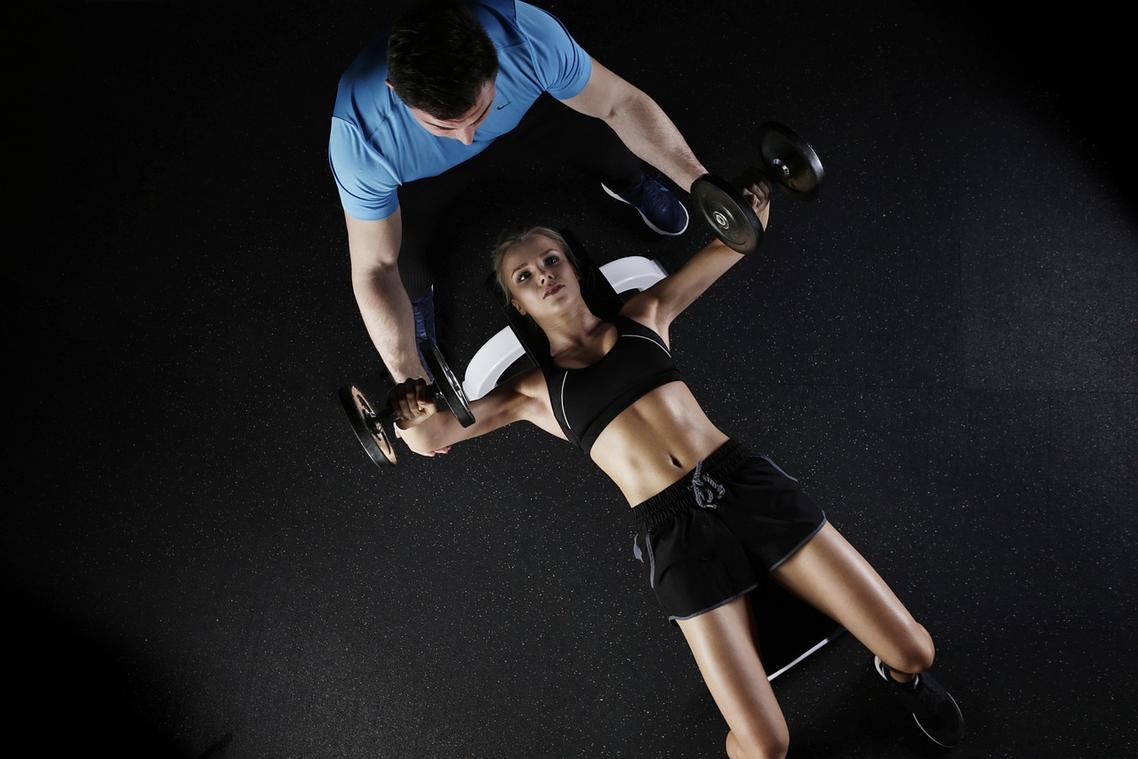
If you want strength without living in the gym, simplicity wins. A three-day schedule—Monday, Wednesday, Friday—creates the perfect balance between stimulus (the workout challenge) and recovery (when your muscles actually rebuild stronger). Think of it as training hard, then getting out of your own way.
Workout A (Push Focus)
This session emphasizes pushing movements, which train the chest, shoulders, and quads.
- Goblet Squats (3×10)
- Push-ups (3x as many reps as possible)
- Banded Overhead Press (3×12)
- Plank (3x 30–60 seconds)
Workout B (Pull Focus)
Here, you target the posterior chain (muscles on the back side of your body).
- Kettlebell Swings (5×15)
- Banded Rows (3×15)
- Walking Lunges (3×10 per leg)
- Side Planks (3x 30 seconds per side)
Alternate A and B each workout. For example: Week 1 (A/B/A), Week 2 (B/A/B). This keeps training balanced and prevents overuse (your shoulders will thank you).
Before starting, review smart warm up routines that boost workout performance to improve mobility and reduce injury risk.
The Principle of Progression
Progression simply means gradually increasing difficulty so your body keeps adapting. Without it, you plateau (when progress stalls despite effort).
Each week, add one rep, one set, reduce rest by 10–15 seconds, or increase resistance with a heavier band or kettlebell. Small upgrades compound over time—like leveling up in a video game, except the gains are real.
This structure works especially well for minimal equipment home workouts because it removes guesswork and maximizes efficiency. Stay consistent, track your reps, and focus on quality movement first. Strength follows strategy.
Beyond the Reps: Mobility and Recovery
First, let’s clarify something: mobility isn’t just “stretching.” Mobility means your joints can move freely and with control through their full range of motion. In other words, it’s strength plus flexibility working together. That’s why a 5-minute warm-up matters. Start with Cat-Cow stretches to mobilize the spine, then Leg Swings (forward and side-to-side) to activate the hips, and Arm Circles to loosen the shoulders. This prepares your body for minimal equipment home workouts and reduces injury risk.
On the other hand, some people skip cool-downs, assuming the workout itself is enough. However, recovery begins immediately after training. A 5-minute cool-down with Pigeon Pose for hips, Couch Stretch for quads, and a simple Hamstring Stretch improves circulation and flexibility (yes, it actually helps tomorrow’s soreness).
Finally, sleep and nutrition aren’t optional. Muscle repair and energy restoration depend on both. Without them, progress stalls—no matter how hard you train.
To elevate your results, consider pairing these minimal equipment workouts with mindful eating strategies, which we delve into in our article on Body Nutrition at Twspoonfitness – for more details, check out our Body Nutrition Twspoonfitness.
Building a Consistent and Powerful At-Home Routine
You came here to prove that results don’t require a gym membership—and now you have the blueprint to make it happen. With a clear plan built around minimal equipment home workouts, the excuses of cost, time, and complexity no longer stand in your way.
By focusing on foundational movements and progressive overload, you’re building real, lasting strength that supports your life—not just your workouts.
Now it’s your move. Choose one workout blueprint and commit to it this week. Thousands are transforming their routines with simple, proven strategies—start today and take control of your fitness momentum.
 James Rossmarindez writes the kind of holistic wellness strategies content that people actually send to each other. Not because it's flashy or controversial, but because it's the sort of thing where you read it and immediately think of three people who need to see it. James has a talent for identifying the questions that a lot of people have but haven't quite figured out how to articulate yet — and then answering them properly.
They covers a lot of ground: Holistic Wellness Strategies, Pro Insights, Health Innovation Alerts, and plenty of adjacent territory that doesn't always get treated with the same seriousness. The consistency across all of it is a certain kind of respect for the reader. James doesn't assume people are stupid, and they doesn't assume they know everything either. They writes for someone who is genuinely trying to figure something out — because that's usually who's actually reading. That assumption shapes everything from how they structures an explanation to how much background they includes before getting to the point.
Beyond the practical stuff, there's something in James's writing that reflects a real investment in the subject — not performed enthusiasm, but the kind of sustained interest that produces insight over time. They has been paying attention to holistic wellness strategies long enough that they notices things a more casual observer would miss. That depth shows up in the work in ways that are hard to fake.
James Rossmarindez writes the kind of holistic wellness strategies content that people actually send to each other. Not because it's flashy or controversial, but because it's the sort of thing where you read it and immediately think of three people who need to see it. James has a talent for identifying the questions that a lot of people have but haven't quite figured out how to articulate yet — and then answering them properly.
They covers a lot of ground: Holistic Wellness Strategies, Pro Insights, Health Innovation Alerts, and plenty of adjacent territory that doesn't always get treated with the same seriousness. The consistency across all of it is a certain kind of respect for the reader. James doesn't assume people are stupid, and they doesn't assume they know everything either. They writes for someone who is genuinely trying to figure something out — because that's usually who's actually reading. That assumption shapes everything from how they structures an explanation to how much background they includes before getting to the point.
Beyond the practical stuff, there's something in James's writing that reflects a real investment in the subject — not performed enthusiasm, but the kind of sustained interest that produces insight over time. They has been paying attention to holistic wellness strategies long enough that they notices things a more casual observer would miss. That depth shows up in the work in ways that are hard to fake.